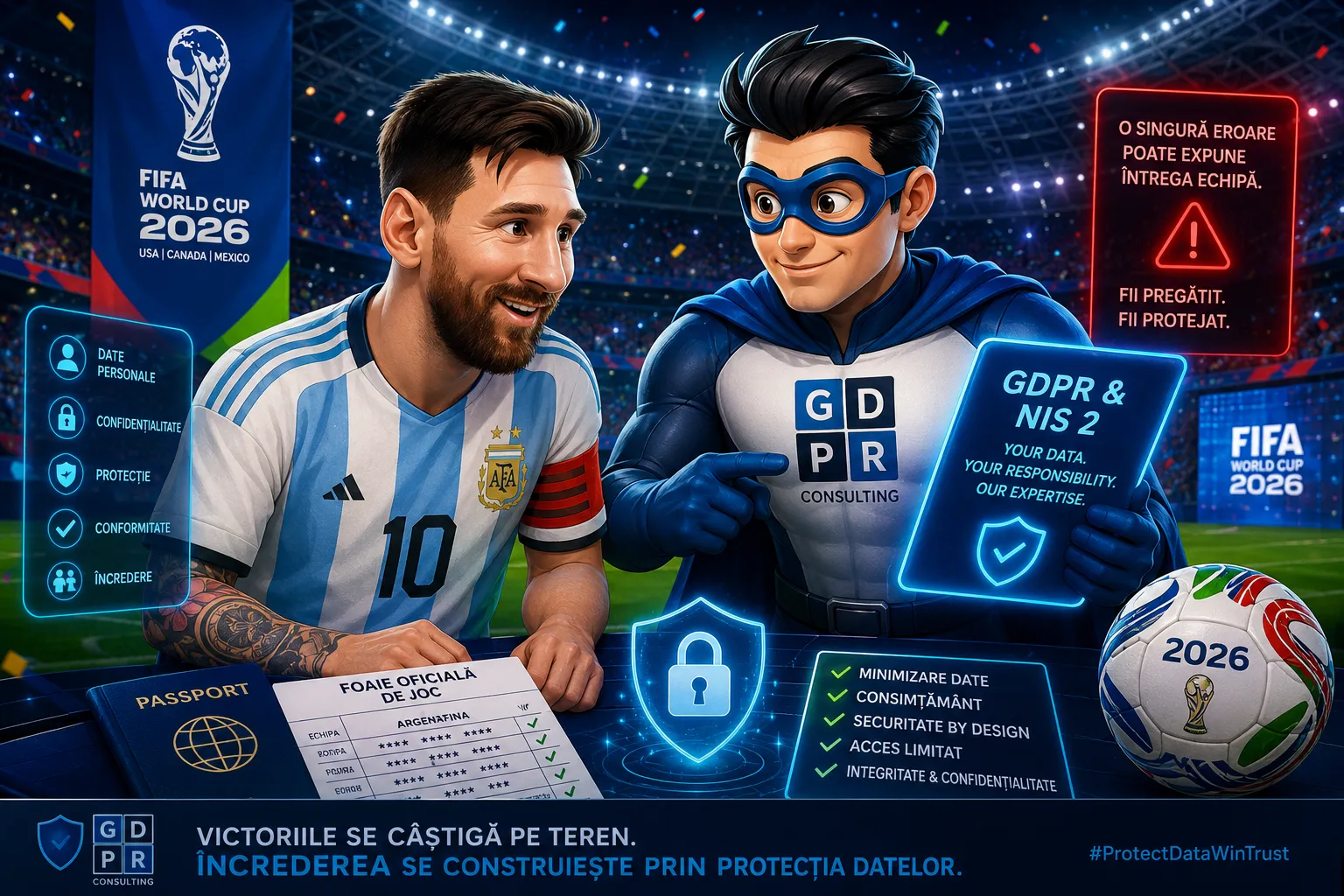
Messi, a passport, and the security nightmare every organization thinks will never happen
What is your organization's reputation worth?
For some companies, millions of dollars.
For others, decades of hard work.
For most businesses, however, reputation is only truly valued when it starts to disappear.
That is precisely why the reported passport exposure involving Lionel Messi and members of Argentina's national team before the 2026 World Cup deserves the attention of every executive, board member, and security leader.
Because this story is not about football.
It is about trust.
And how quickly trust can be lost.
When Billions Invested in Security Are Defeated by a Single Mistake
The world's largest sporting events operate under extraordinary security controls:
- advanced technology infrastructure;
- strict operational procedures;
- dedicated cybersecurity teams;
- comprehensive governance frameworks.
Yet even in highly controlled environments, sensitive information can be exposed through a simple procedural failure.
No sophisticated malware.
No nation-state attack.
No artificial intelligence.
Just a document that should have been reviewed before it was shared.
That uncomfortable reality highlights a critical fact:
Most data breaches do not begin with hackers. They begin with people.
A rushed approval.
A missing verification step.
An attachment sent too quickly.
A spreadsheet containing more information than anyone realized.
The Dangerous Illusion Facing Many Organizations
Many executives still believe cybersecurity is primarily an IT responsibility.
That assumption may be one of the most expensive risks in modern business.
Because sensitive information moves far beyond the IT department.
Every day, organizations share:
- contracts;
- employee records;
- customer databases;
- financial reports;
- supplier information;
- operational documentation.
The real question is not whether sensitive information exists inside those documents.
The real question is:
Who verifies what leaves your organization?
The Cost of a Data Exposure Is Much Bigger Than a Fine
When organizations think about privacy incidents, they often focus on regulatory penalties.
In reality, fines are rarely the greatest damage.
The true impact appears elsewhere.
Loss of Trust
Customers lose confidence.
Partners become cautious.
Investors start asking questions.
Operational Disruption
Internal investigations.
External audits.
Legal reviews.
Crisis communications.
Remediation programs.
Reputation Damage
A single incident can become global news within hours.
And once information reaches the internet, control is rarely recovered.
What GDPR and NIS2 Are Really Trying to Prevent
Many organizations still view GDPR and NIS2 as compliance exercises.
They are not.
At their core, both frameworks are designed to address a fundamental business risk:
Human error.
The goal is not merely regulatory compliance.
The goal is resilience.
That means:
- governance structures;
- documented procedures;
- employee awareness;
- data minimization practices;
- security-by-design principles;
- continuous operational training.
The Question Every Executive Should Ask Today
If one of your organization's internal documents appeared on the front page of tomorrow's news, could you confidently demonstrate that every reasonable safeguard was in place?
Could you prove that your people were trained?
Could you prove that your controls were effective?
Could you prove that your organization was prepared?
If not, the Messi incident is not simply a headline.
It is a warning.
The Real Lesson Behind the Story
Technology will continue to evolve.
Cyber threats will become more sophisticated.
Artificial intelligence will transform the way organizations operate.
Yet the most significant vulnerability remains unchanged:
Human behavior.
The organizations that thrive over the next decade will not necessarily be those that spend the most on technology.
They will be the organizations that build a culture of security, privacy, and accountability.
Because compliance is no longer about avoiding penalties.
It is about protecting trust.
And trust remains the most valuable asset any organization owns.