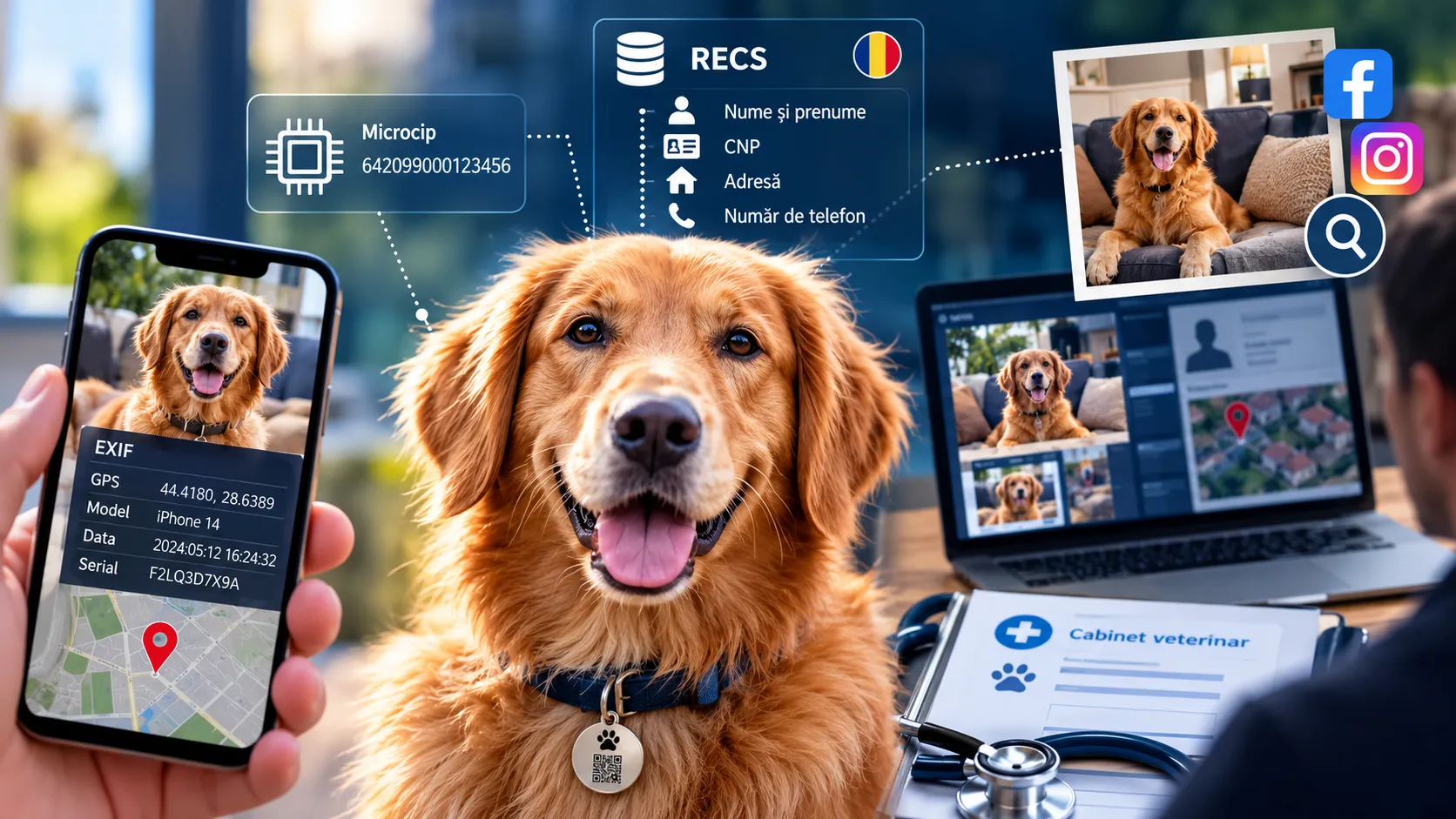
When we think about personal data, the first things that usually come to mind are names, identification numbers, email addresses, or phone numbers. However, under the General Data Protection Regulation (GDPR), the concept of personal data is far broader and more dynamic than many people realize.
A pet, whether a dog or a cat, does not have legal personality and does not directly benefit from the rights granted by Regulation (EU) 2016/679. Nevertheless, information related to an animal may become indirect personal data if it allows the direct or indirect identification of a natural person.
1. The Legal Perspective: When Does a Pet Become an Indirect Identifier?
According to Article 4(1) GDPR, an identifiable natural person is someone who can be identified, directly or indirectly, by reference to an identifier such as a name, an identification number, location data, or one or more factors specific to their physical, physiological, genetic, mental, economic, cultural, or social identity.
The key question is therefore not whether the data belongs to the animal, but whether it can be used to identify the owner.
A. Microchip Numbers and National Databases
Dogs are identified through an ISO 11784/11785 compliant microchip containing a unique 15-digit code. In Romania, this code is registered in the Dog Ownership Registry (RECS) and linked to information such as:
- The owner's full name;
- National identification number;
- Residential address;
- Contact details.
Access to this information is restricted to authorized individuals and entities in accordance with applicable legislation.
Legal conclusion: to the extent that a microchip number can be associated, through reasonable means, with the identity of its owner, it may constitute indirect personal data under the GDPR. Although the identifier directly relates to the animal, its connection with official records can lead to the identification of a natural person.
B. Unique Visual Characteristics and Data Correlation (Linkability)
This concept is known in privacy and information analysis as "linkability", meaning the ability to connect information originating from different sources.
If a dog has distinctive characteristics, such as rare markings, visible disabilities, a highly uncommon breed, or wears personalized accessories, photographs of that animal shared online may be correlated with publicly available information from other sources.
In some situations, such correlation can contribute to identifying the owner even when their name is not explicitly disclosed.
2. OSINT Investigations: How a Pet Can Help Identify a Person
One of the most fascinating aspects of Open Source Intelligence (OSINT) is that seemingly insignificant details can become valuable clues when analyzed together.
In practice, investigators and analysts may correlate:
- The breed and distinctive characteristics of an animal;
- Images found on social media and other public platforms;
- Recognizable furniture, decorations, accessories, or environmental details visible in photographs.
Numerous OSINT investigations have demonstrated that pets, decorative objects, furniture, and other seemingly trivial details can contribute to identifying individuals when combined with publicly available information.
Importantly, identification rarely results from a single photograph. It is usually achieved through the correlation of multiple pieces of information that, independently, may appear harmless.
3. The Technical Element: EXIF Metadata and Digital Footprints
Beyond the visible content of a photo, digital images often contain hidden information known as EXIF metadata (Exchangeable Image File Format).
When you take a picture of your dog with a smartphone and upload it to a forum or website that does not automatically remove EXIF metadata, the image may contain:
- GPS coordinates of the location where the photograph was taken, if geolocation was enabled;
- Exact date and time of capture;
- Device model information;
- Camera serial number and technical data.
From an information security and privacy perspective, an apparently innocent image of a pet may reveal much more information than intended.
4. Best Practices for Privacy and Data Protection
Whether you manage a website, a veterinary clinic, an NGO, or simply care about your digital footprint, a few simple precautions can significantly reduce privacy risks.
1. Remove EXIF Metadata
Before publishing images on your own platforms, use tools that remove EXIF metadata or convert images in a way that eliminates GPS coordinates and other hidden information.
2. Be Careful with Visible Contact Information
Avoid sharing close-up images of pet tags, QR codes, engraved collars, or accessories displaying:
- Phone numbers;
- Email addresses;
- Residential addresses;
- Other personal contact details.
3. Treat Microchip Records as Personal Data-Related Information
Veterinary clinics and organizations managing databases containing microchip numbers linked to owners should implement appropriate technical and organizational measures such as:
- Access controls;
- User authentication;
- Retention policies;
- Access logging and auditing;
- Data Processing Agreements (DPAs) with software providers.
Conclusion
Your dog is not a GDPR data subject, but the information surrounding your dog can define you in the digital world.
From official registries to social media posts, the relationship between a pet and its owner can transform seemingly harmless animal-related information into personal data capable of identifying an individual.
In the age of OSINT, social media intelligence, and large-scale data correlation, even a simple photograph of a family pet can become an important piece of an identification puzzle.
Data protection is not only about the information we reveal about ourselves. It is also about the information we disclose about the people, devices, objects, and even animals that surround us every day.